
The Role of Play in Pediatric Communication Therapy
Why Play is Central to Pediatric Therapy
For children, play serves as a natural language through which they express fears, process experiences, and connect with others. Because abstract thinking is not fully developed in early childhood, play acts as a primary vehicle for growth, bridging the gap between internal feelings and external communication per the Association for Play Therapy.
Play-based intervention is a core method utilized by Pediatric Communication Solutions to support cognitive, social, emotional, and physical development. Unlike rigid clinical models, play-focused pediatric speech therapy offers a naturalistic environment that empowers children to engage with autonomy. Through careful observation, our licensed speech-language pathologists transform playtime interactions into purposeful milestones, building the functional communication skills children need to succeed.
Using play to encourage communication from your child
The Speech-Language Pathologist’s Role in Pediatric Care
A pediatric speech-language pathologist (SLP) functions as a specialized partner in a child’s developmental journey. These professionals evaluate and treat a broad spectrum of challenges related to articulation, language comprehension, and social pragmatics. At Pediatric Communication Solutions, clinicians prioritize individualized care plans that extend beyond standard practice to support unique feeding and swallowing needs, ensuring each child receives tailored guidance.
What is the primary role of a speech-language pathologist in pediatric care? Their work centers on diagnosing and addressing barriers to communication and oral-motor function. By applying evidence-based methodologies, they help children navigate hurdles in expressive language and social interaction. Unlike generic therapy providers, Pediatric Communication Solutions integrates these interventions into play-based environments, which research confirms boosts language development more effectively than traditional clinic-only models.
Successful outcomes rely on collaboration with a child’s broader support system. Pediatric Communication Solutions actively involves families in the therapeutic process, teaching caregivers how to model language in natural, home-based routines. This coordination with medical specialists and educators ensures that the progress a child makes during a session helps them succeed in school and participate fully in daily interactions.
How SLPs Support Communication and Language Development
Pediatric speech-language pathologists (SLPs) begin by conducting comprehensive evaluations to identify a child’s unique communication strengths and specific areas where growth is needed. At Pediatric Communication Solutions, these assessments go beyond basic diagnostics to build a foundation for personalized care that addresses speech sounds, language comprehension, and expressive abilities.
Once a professional baseline is established, clinicians craft individualized care plans with targeted, measurable goals. These programs often center on play-based activities, which create a natural, low-pressure context for learning. This approach uses a child’s inherent interests to facilitate language acquisition.
Evidence supports the efficacy of play-based therapy in supporting communication development. By transforming therapy into an engaging, narrative experience, Pediatric Communication Solutions ensures children remain motivated throughout their sessions.
Long-term progress relies heavily on family collaboration. Experts from the American Speech-Language-Hearing Association emphasize that coaching caregivers to implement these strategies at home is vital. By providing parents with the tools to reinforce communication goals during daily routines, therapists help children successfully carry over their newfound skills into real-world interactions.
Defining Play-Based Speech Therapy and Why It Works
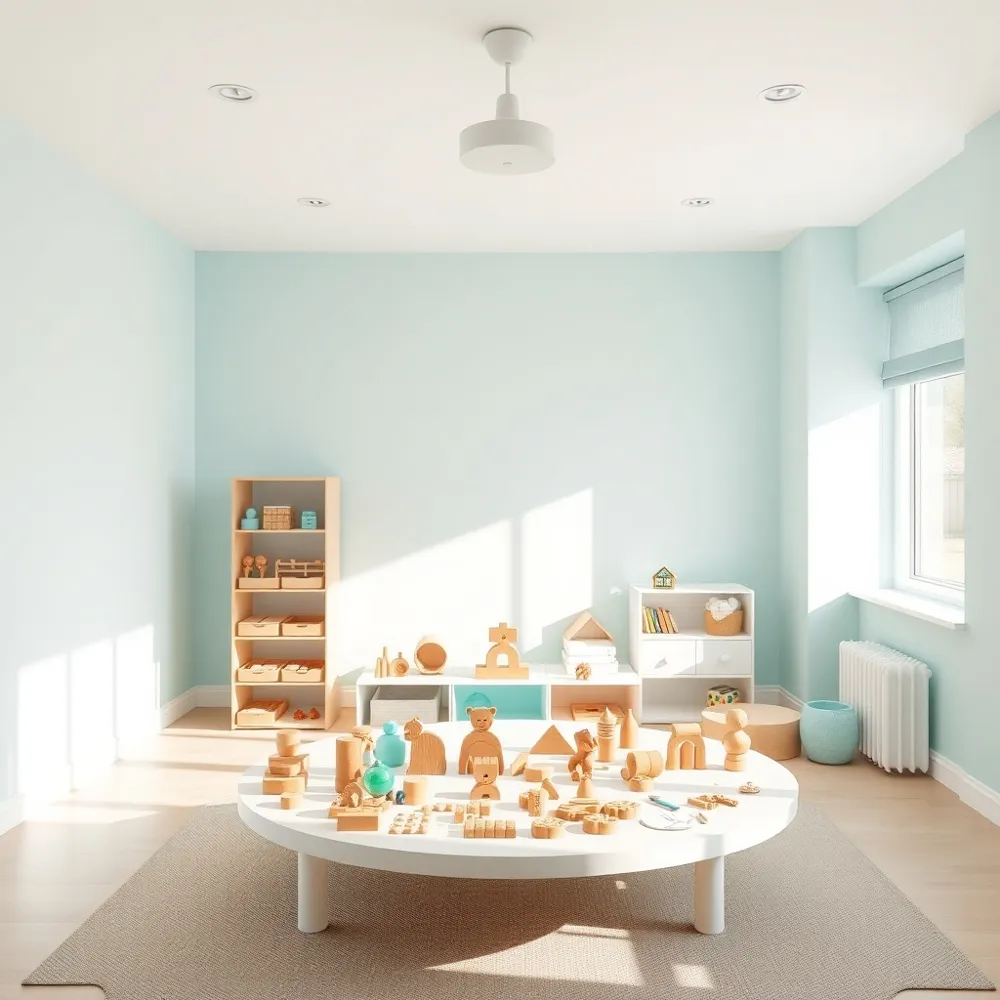
Play-based speech therapy is a child-centered approach where licensed speech-language pathologists (SLPs) use play activities as the primary vehicle for developing communication, language, and social skills. Rather than relying on traditional drill-based tasks, clinicians embed therapeutic goals into meaningful, engaging contexts that align with how a child naturally interacts with the world. This low-pressure environment is essential for fostering motivation, as it allows children to practice communication skills without the fear of failure.
Research supports the efficacy of this method, particularly for children with developmental language disorders. Studies indicate that combining play therapy techniques with targeted language facilitation leads to measurable gains in speech intelligibility and vocabulary usage. At Pediatric Communication Solutions, we recognize that these naturalistic interactions help children generalize their skills to daily life, a common limitation with more rigid, adult-led models.
For toddlers with language delays, specialized play-based interventions have shown significantly better results than traditional clinic-based approaches. A 2026 pilot study found that specialist-mediated play therapy helped 50% of participants achieve normal language scores after 12 months, compared to only 18.3% in standard clinical settings. By choosing a compassionate, child-led program, families gain a partner in their child’s developmental journey, ensuring that therapy feels like a natural part of play rather than a chore.
Core Principles of Child-Centered Play-Based Interventions
What are the core principles of using child-centered and play-based interventions in speech therapy? These evidence-based methodologies use a child’s preferred medium of play to support developmental growth. At pcs-ok.com, clinicians anchor their practice in a warm, supportive relationship defined by unconditional positive regard. This foundation of empathy and acceptance creates the safety a child needs to explore their potential without the pressure of rigid, performance-based drills.
A central tenet involves following the child’s lead, where the practitioner honors the unique interests and agenda the child brings to the session. This approach empowers children to view themselves as active architects of their learning process rather than passive recipients of instruction. By observing cues, gestures, and vocalizations, therapists at pcs-ok.com adapt their goals to match what currently motivates the child most.
Creating a permissive, secure environment allows children to safely externalize and resolve complex emotions, a technique often highlighted in child-centered play therapy frameworks. Within this space, language facilitation occurs naturally. Therapists embed effective language targets directly into pretend play, storytelling, or building activities. This seamless integration makes communication feel purposeful and fun, significantly improving retention and social outcomes compared to traditional, directive approaches.
Adapting Play Techniques for Articulation and Language Goals
Effective pediatric speech-language therapy thrives when clinicians transform abstract goals into concrete, memorable experiences. Rather than relying on traditional flashcards, Pediatric Communication Solutions uses play to build language skills, such as incorporating sound-loaded character names or specific objects like seeds and salt in a pretend cooking scene to help children anchor pronunciation, according to strategies published by The ASHA Leader.
Clinicians must strategically balance required targets, which a child must demonstrate to access a toy, with suggested targets that encourage natural flow. This method, often called using communication temptations, keeps sessions motivating and prevents them from feeling like rigid drills. By following a child’s lead, therapists at pcs-ok.com ensure that social communication feels authentic and intrinsically rewarding.
Pretend play, such as playing store or baking imaginary cookies, provides a rich context for building expressive language and sequencing skills. When these sessions are structured episodically, they act as a narrative that supports memory retention. As research in Specialist-mediated play therapy highlights, toddlers who engage through naturalistic play models often show greater developmental gains than those in purely clinical, passive environments. By tailoring sessions to a child’s specific interests, therapists create opportunities for generalization that help skills carry over from the classroom to the home.
Play-Based Interventions for Children on the Autism Spectrum
Play-based interventions serve as a compassionate, child-centered bridge for children on the autism spectrum to develop communication and social skills in a low-pressure environment. By integrating play into sessions at pcs-ok.com, clinicians meet children at their specific sensory levels, using structured games or pretend play to foster connection as noted in research on play-based interventions.
These interventions are highly adaptable, ranging from child-led sessions that increase confidence to directive techniques that help practice turn-taking and self-regulation. Specialized models such as Child-Centered Play Therapy, Floortime, and JASPER offer frameworks for building engagement. While generic behaviorist models may prioritize compliance, pcs-ok.com prioritizes personalized autonomy to ensure children feel safe expressing themselves.
By utilizing tools such as sensory-rich activities, storytelling, or role-play, speech-language pathologists help children translate internal experiences into meaningful interaction. A 2026 pilot study of 180 toddlers found that specialist-mediated play therapy led to significantly greater language gains than clinic-based rehabilitation. Ultimately, these evidence-based approaches transform play from a simple pastime into a vital medium for children to build the fundamental skills necessary for community interaction.
Collaboration Across Disciplines and With Families
Effective pediatric care often requires an interdisciplinary approach, where speech-language pathologists (SLPs) synchronize their efforts with occupational therapists, physical therapists, and educators. By sharing unified, play-based goals, these teams provide a holistic support system that addresses the diverse developmental needs of a child. At Pediatric Communication Solutions, clinicians coordinate across these specialties to ensure that language progress supports overall functional development, a structure that contrasts with fragmented care models often found in generic outpatient facilities.
Specific evidence-based models like the Play and Language (PAL) intervention demonstrate how integrating traditional language facilitation with dedicated play therapy techniques leads to improved speech intelligibility and social engagement. This collaborative strategy allows practitioners to transition between skill-building exercises and imaginative outlets, creating a supportive environment that encourages child participation.
True therapeutic success rests on active parent and caregiver involvement. Strategies such as filial therapy and Kinder Training provide families and educators with the tools to mirror these therapeutic goals in everyday life. By coaching parents to act as agents of change, Pediatric Communication Solutions ensures that progress made in the clinic generalizes to home and community settings.
- Unified planning across specialties creates consistency in a child’s learning environment.
- Parent-led interventions extend the impact of clinical sessions into daily routines like meals and playtime.
- Natural environments, such as homes or schools, help children apply new communication skills in context-specific ways.
Planning Effective Play-Based Therapy Sessions
Effective pediatric speech-language therapy begins by identifying specific communication goals before selecting activities, ensuring the play serves the learning objective rather than dictating it. At Pediatric Communication Solutions, our therapists design individualized, play-based strategies that align with a child’s unique needs, preventing sessions from becoming rigid drills while maintaining focus on clinical milestones.
Clinicians should treat play-based therapy as an episodic narrative, creating memorable moments that scaffold retention. Using real-world objects like kitchen supplies or sensory materials in pretend scenarios makes language targets concrete, which is far more impactful for a child than traditional flashcards. By organizing sessions into narrative structures, children can better recall learned concepts throughout their day.
Maintaining intrinsic motivation requires balancing required targets, which are necessary to access reinforcement, with suggested targets that encourage exploration without pressure. This nuanced approach mimics the flexibility found in specialist-mediated play therapy, where clinicians act as active architects of the interaction. These methods remain highly versatile and can be adapted for older students or adolescents by observing their natural peer-group interests and social communication styles.
Research Evidence and Future Directions
The efficacy of play-based interventions is supported by decades of data. A foundational 1994 study by Whitehurst et al. demonstrated that preschoolers participating in play-based activities made significant gains in both language and literacy. These benefits extend to behavioral improvements, as evidenced by the 2021 Play and Language (PAL) study, which observed improved speech intelligibility and successfully normalized challenging behaviors in most participants.
Recent findings emphasize the transformative potential of these methods in early childhood. A 2026 pilot study tracking 180 toddlers revealed that 50% of children receiving specialist-mediated play therapy achieved language scores within the normal range after 12 months, significantly outperforming traditional clinic-based approaches. This highlights the importance of individualized, play-focused care.
While current play-based models offer diverse options, ranging from child-led to practitioner-guided frameworks, the field is evolving. Experts advocate for larger-scale randomized controlled trials and the adoption of neurodiversity-affirming, strengths-based approaches that respect individual autonomy. Moving forward, the most effective outcomes for patients at pcs-ok.com will stem from integrating these evidence-based techniques into comprehensive, inclusive care plans that prioritize a child’s unique developmental profile.
Transforming Challenges Into Playful Progress
Play serves as a potent, evidence-based tool for pediatric progress. By mirroring a child’s natural language, pcs-ok.com creates customized, play-based strategies that move beyond rigid, drill-heavy alternatives found in many traditional clinical settings.
True growth flourishes through teamwork. Individualized, play-based therapy at our practice integrates family involvement and interdisciplinary input, ensuring therapy extends successfully into your daily routine. While some programs rely on generic, repetitive exercises, our clinicians function as active architects of your child’s developmental journey.
Every session is a building block for future independence. By turning hurdles into opportunities, pcs-ok.com empowers children to gain the confidence, language, and social skills necessary for a lifetime of meaningful connection.